
Everything You Need to Know About Staying in a Mountain Refuge with Little Kids
There’s something undeniably magical about spending a night high in the mountains. The stillness. The golden light at sunset. The way everything feels just a little bit wild and adventurous.
And yes — you can do it with little kids!
If you’ve ever wondered whether staying in a mountain refuge (or mountain hut) is realistic with babies, toddlers or young children, this guide will walk you through everything you need to know — from what to expect to how to choose the right one for your family.
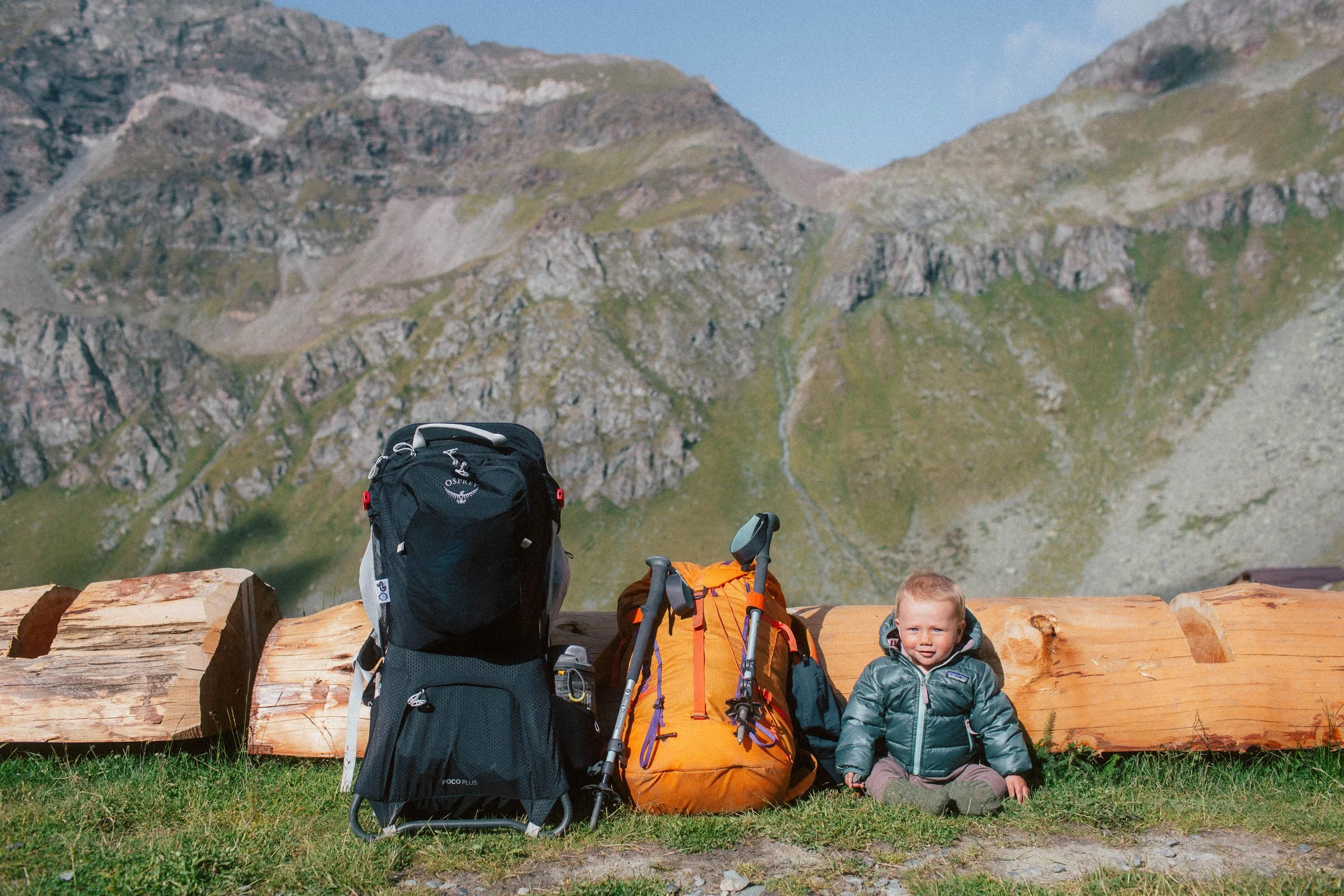
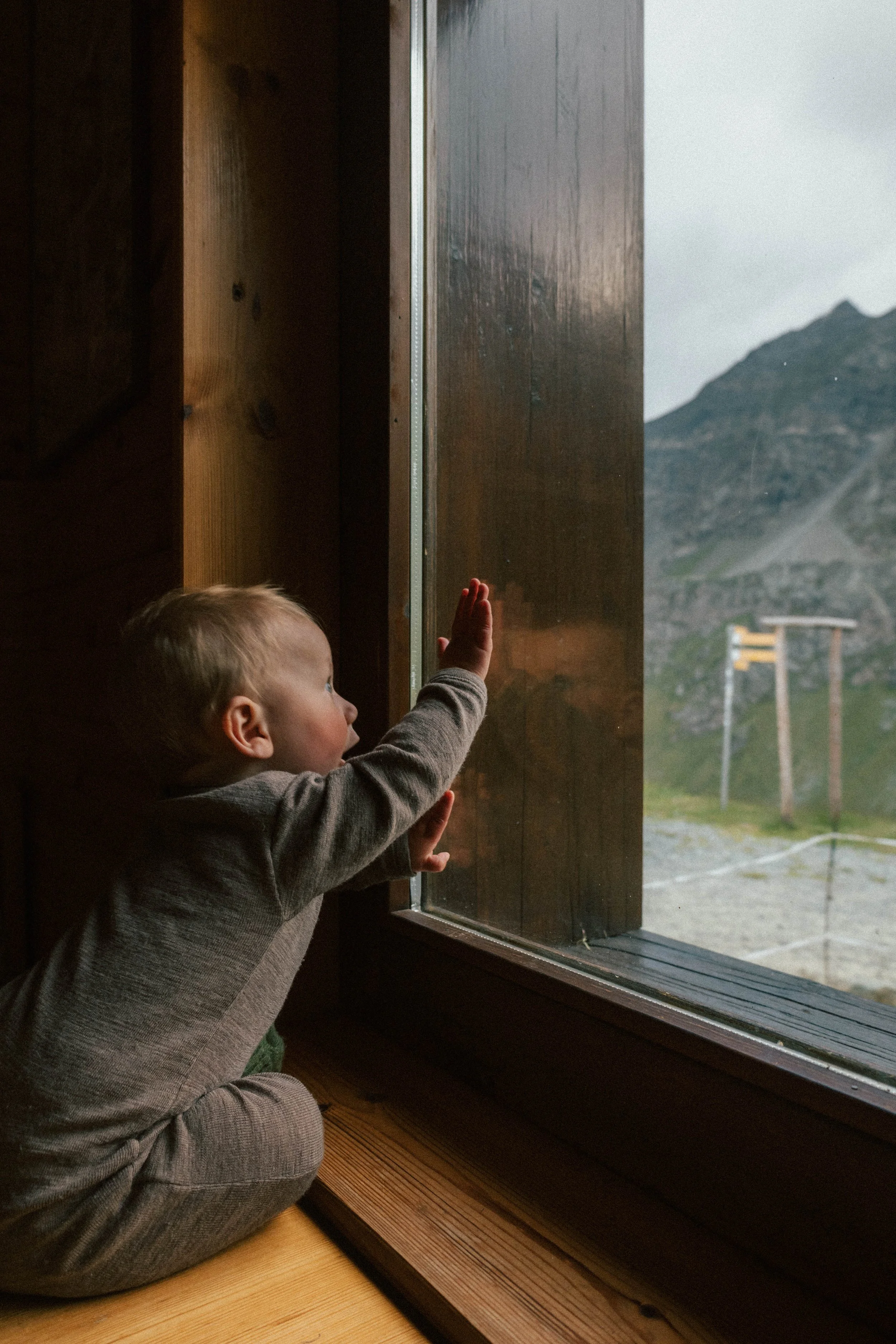
As a couple, Harvey and I have stayed in numerous mountains huts that we’ve used as bases for Alpine hiking and climbing. When we had our first baby 4 years ago, we knew it was something we would love to do with our own children. Aífe stayed in her first mountain refuge in Italy at 8 months old and has stayed in a number of others since. These experiences are some of our favourite as a family so we want to show you how you can do it too. So, let’s get started…
What Is a Mountain Refuge?
A mountain refuge is a simple shelter located high in the mountains where hikers can rest, eat, warm up — and often stay overnight.
They’re designed to support people travelling on foot in remote areas. Think of them as cosy pauses along the trail. A safe, welcoming place to refuel before continuing your adventure.
Some are rustic and basic. Others are surprisingly comfortable — almost hotel-like — with hearty home-cooked meals and private rooms. The experience varies widely — which is why choosing the right one matters when you’re travelling with children.
Where Are Mountain Refuges Found?
Mountain refuges are typically found:
Along popular long-distance hiking routes
In high alpine passes
In quiet valleys far from roads
In remote mountain regions
They’re often spaced roughly a day’s walk apart — positioned exactly where tired legs (and big views) call for a well-earned rest.
In Europe, you’ll find them throughout the Alps, Dolomites, Pyrenees and other mountainous regions. Many are run by national alpine clubs or family owners who have been welcoming hikers for generations.
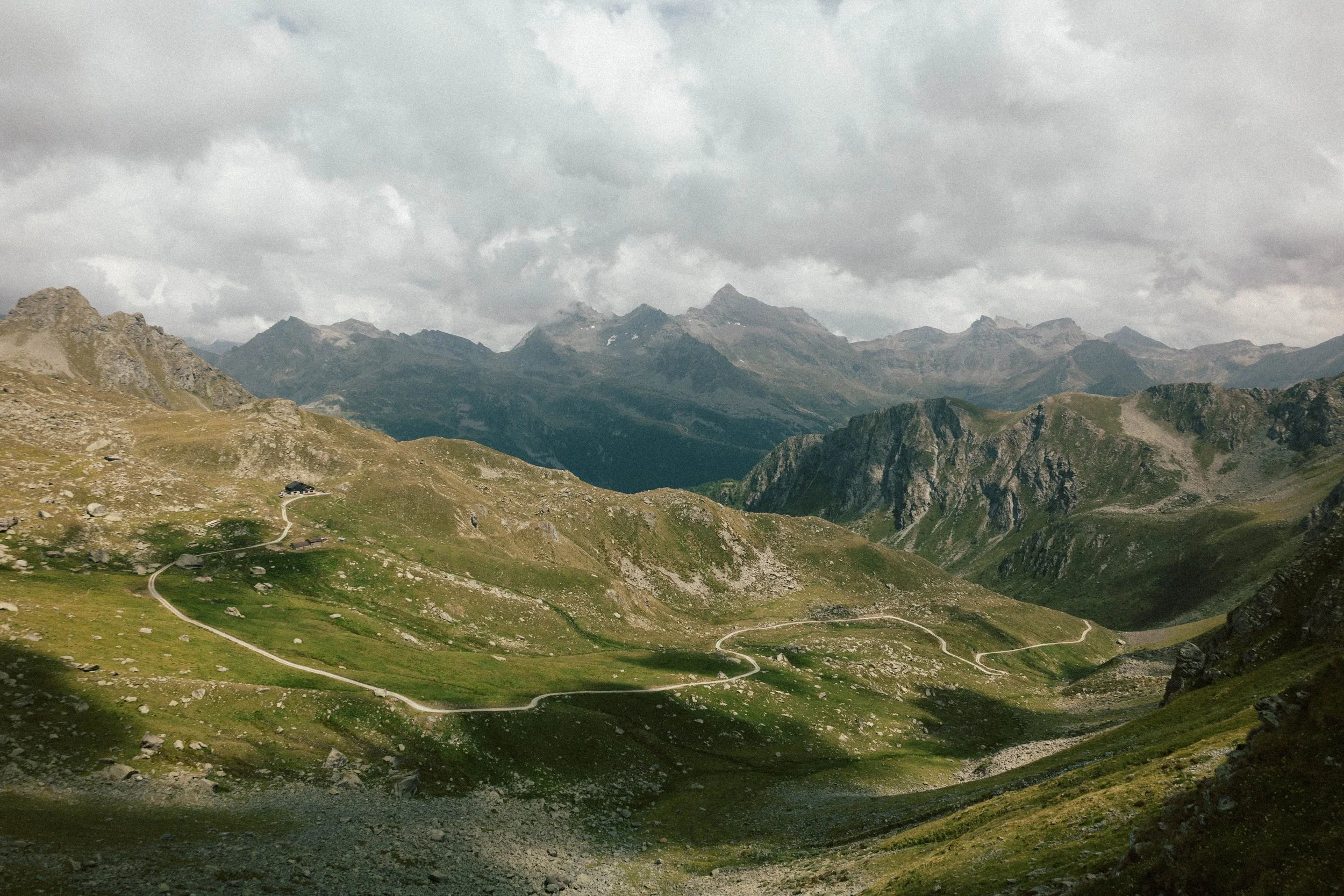
Rifugio Grand Tournalin, Valle D’Aosta, Italy
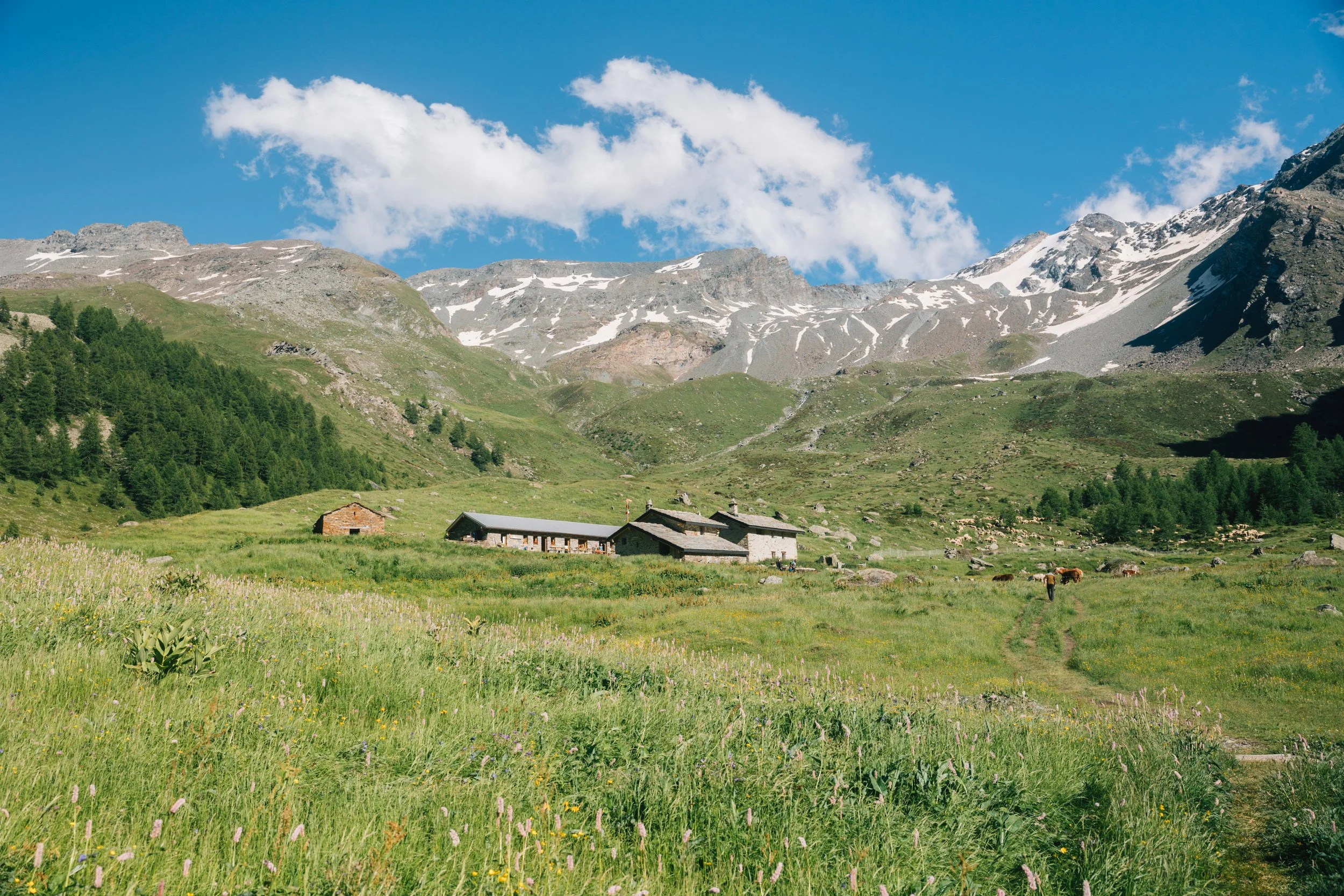
Rifugio delle Marmotte, Gran Paradiso National Park, Italy
Can You Stay in a Mountain Refuge with Kids?
Yes — absolutely!
But some refuges are far more family-friendly than others. Before booking, check:
How far you need to hike to reach it
The type of terrain (rocky? exposed? narrow paths?)
Whether there are steep or technical sections
If there are lingering snow patches
What kind of room options are available
If you’re unsure, email the owners or hosts. They’re usually very honest about what to expect and whether the approach is manageable with young children.
As with any mountain adventure, choosing something within your family’s comfort zone is key.
Choosing the Right Room
When staying in a mountain refuge with young children, a private room is ideal if available. Many huts offer:
Shared dormitories with bunk beds
Small private rooms
Occasionally family-specific rooms
A private space means you won’t worry about disturbing other hikers — especially those heading off at sunrise for a long climb.
If a refuge only offers dormitories, consider whether or not your child sleeps reliably as the last thing you (and everyone else) wants is a little one keeping everyone awake — bearing in mind that many people stay in mountain refuges to get up at the crack of dawn and go Alpine climbing. And if it’s not your child keeping everyone awake, it might be someone snoring!
You should also be prepared to co-sleep with your baby or toddler as most refuges don’t offer travel cots. Alternatively, you can purchase a portable pop-up travel cot for your baby and carry it in.
To find out what kind of rooms are on offer, just check the website for the individual refuge and, if you’re still uncertain, email the hosts.
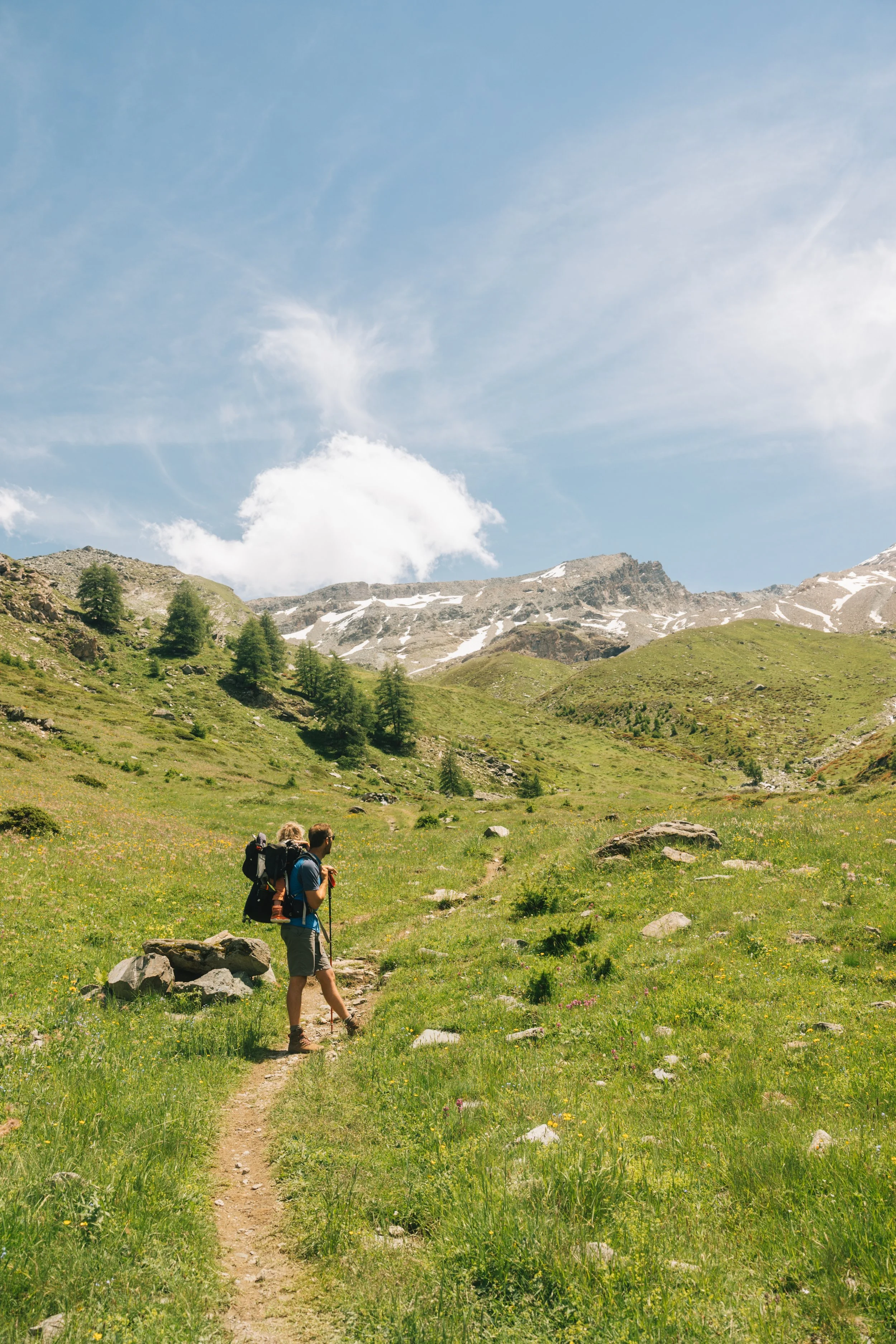
Rifugio delle Marmotte, Gran Paradiso, Italy
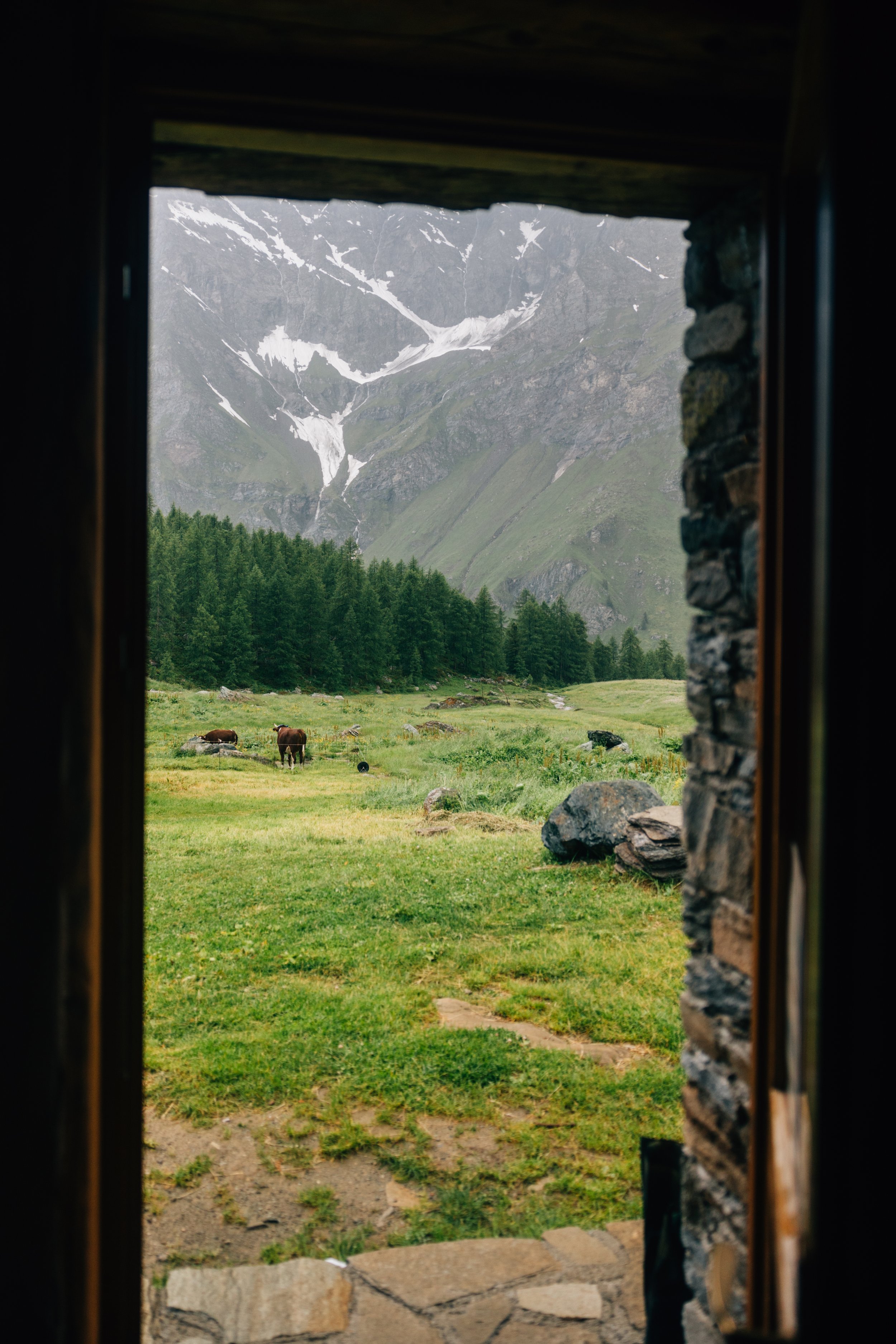
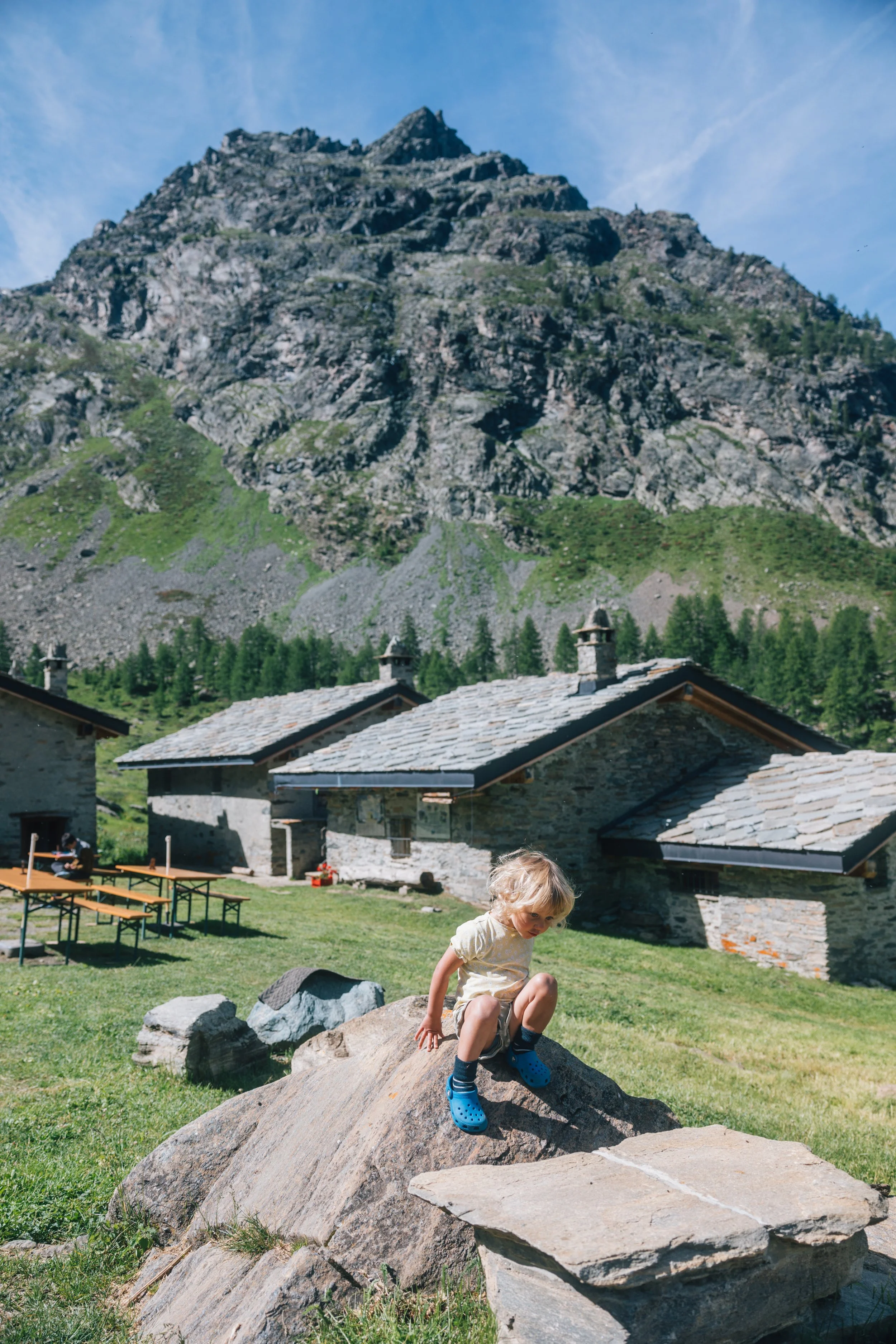
How Hard Is the Walk In?
This varies hugely. Some refuges are just a short walk from a gondola or chairlift — perfect for a first experience. Others require several hours of hiking to reach. We have done a mixture of the two, but when travelling with little kids, you might prefer:
A shorter route
A trail with steady gradients
A hut that isn’t too remote
But if your family is experienced and confident on the trail, you may feel comfortable going further.
There’s no right answer — just the one that works for you!
What About Food?
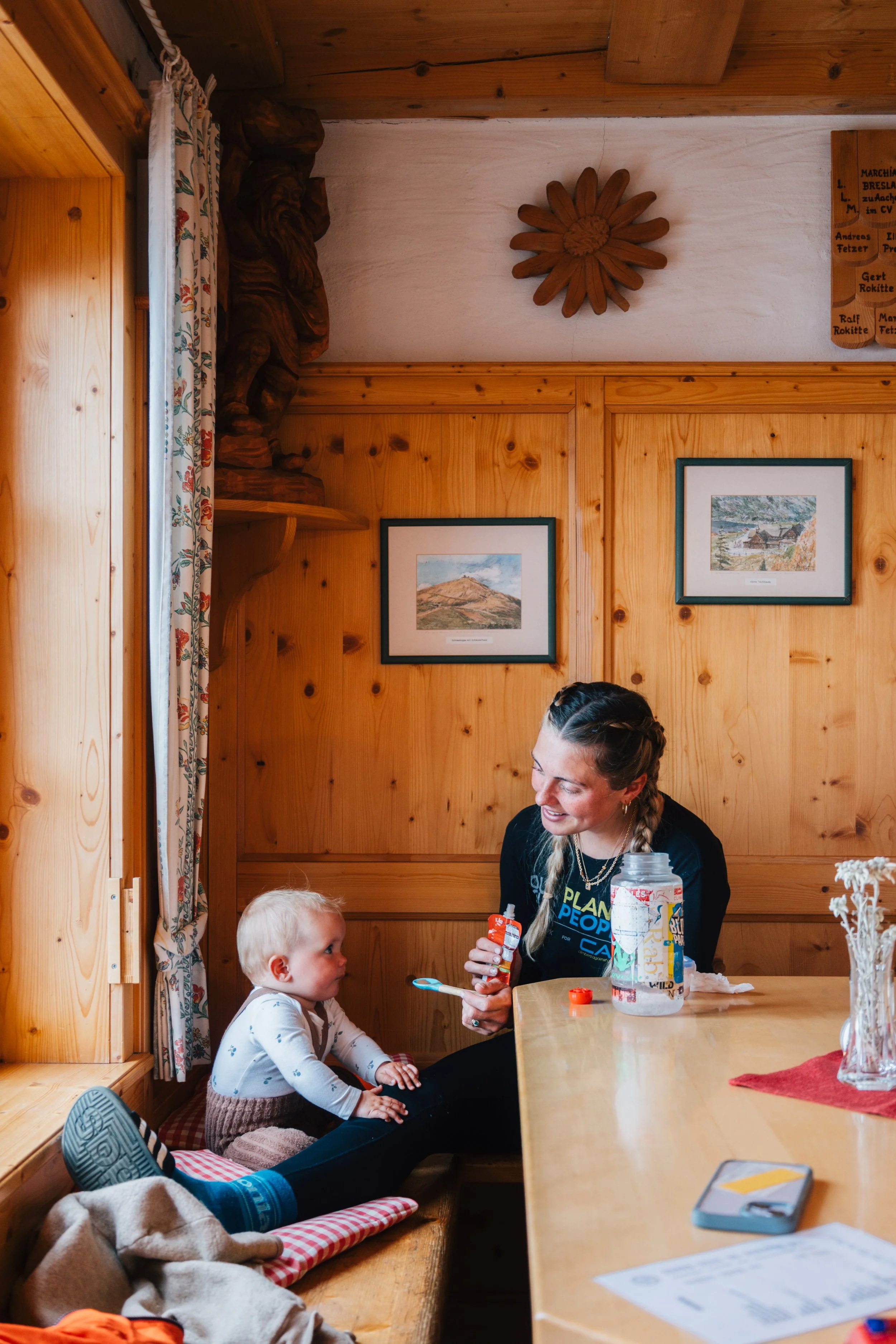
One of the best parts of staying in a mountain refuge is definitely the food. We’ve honestly had some incredible culinary experiences in refuges.
Most refuges offer dinner and breakfast as part of your stay and we’d highly recommend booking food for the full experience. You can expect:
Hearty soups
Pasta or traditional mountain dishes
Fresh bread
Homemade cakes
Hot chocolate for tired little hikers
Some more basic huts allow you to bring your own camping stove and cook outside, though this varies. Always check what’s included before you go.
If your child has allergies or specific dietary needs, contact the refuge in advance.
How to Find and Book Mountain Refuges
Start by looking at:
National alpine club websites
Local mountain tourism boards
Hiking guidebooks
Route-planning apps
Google Maps
We’d always recommend booking in advance, particularly in summer and school holidays.
And if you’re unsure about the terrain, snow conditions or suitability for children — email the hosts. It’s always better to ask.
Top Tips for Staying in a Mountain Refuge with Kids
Check whether you need to bring your own sleeping bag or liner. Some refuges have bedding provided and in others you need to bring your own.
Bring cash (some remote huts don’t take cards)
Pack warm layers — temperatures drop quickly after sunset
Check the weather forecast and trail conditions before setting off
Pack light, but don’t skip essentials
Most importantly: build in flexibility. Things take longer with children — and that’s part of the adventure.
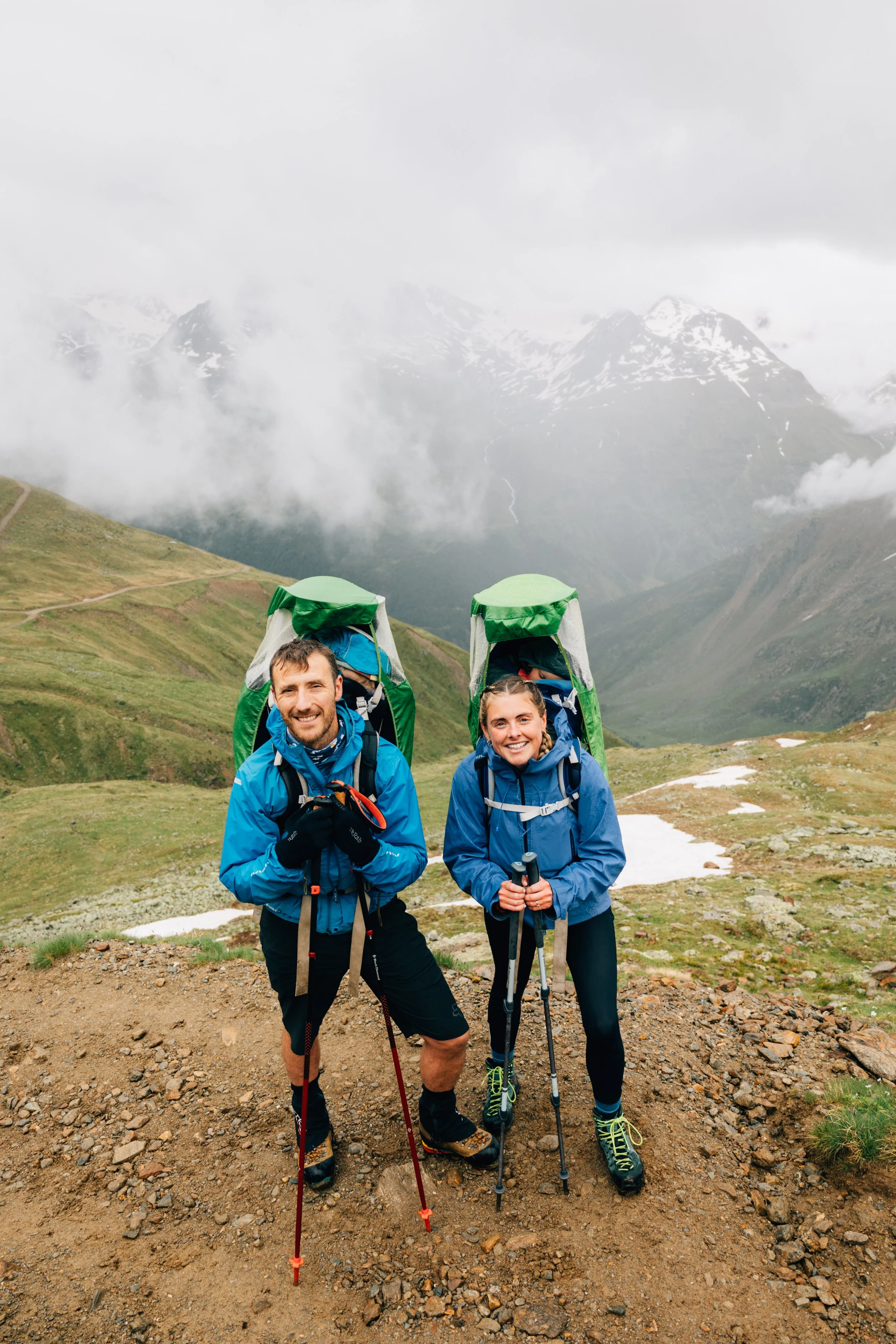
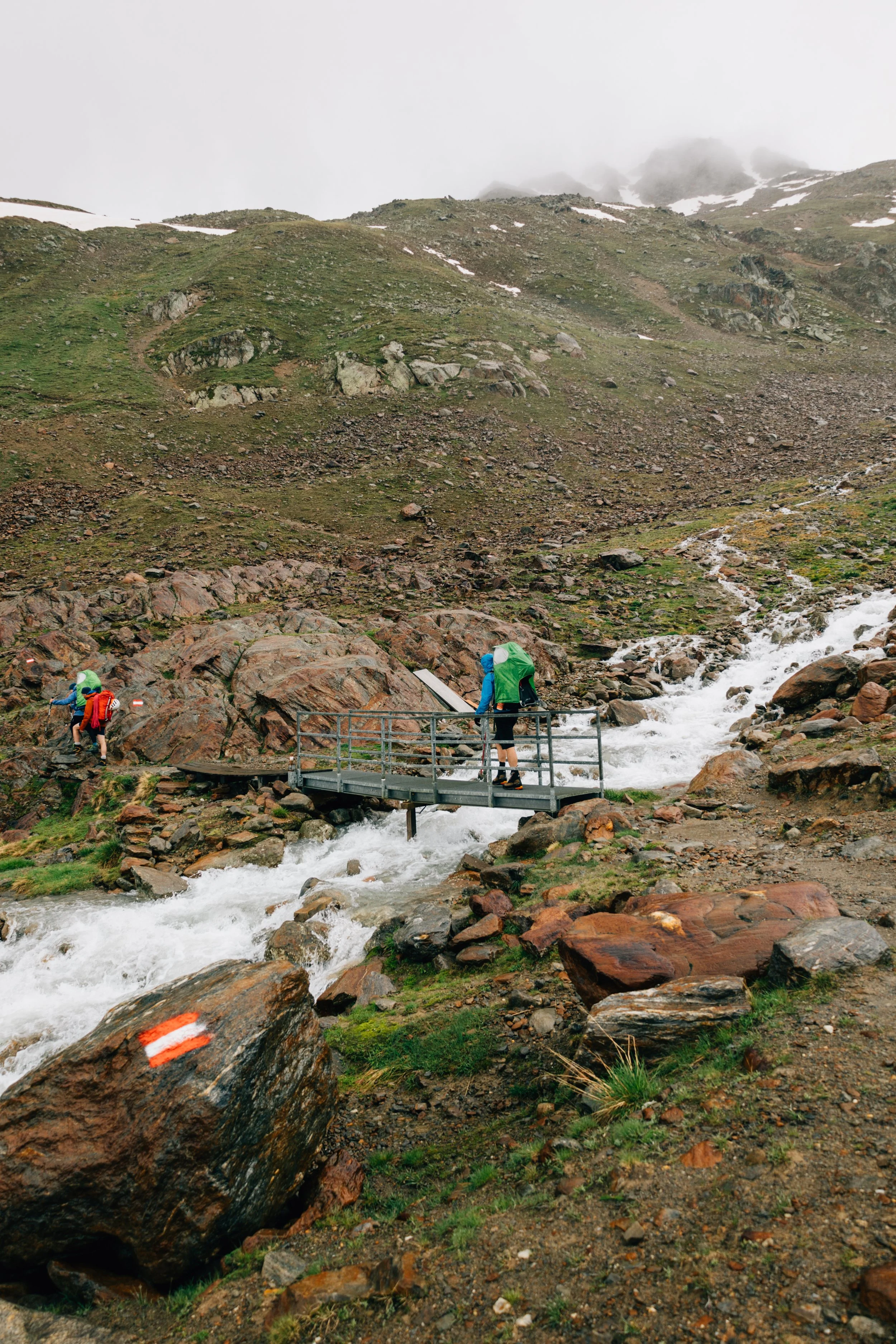
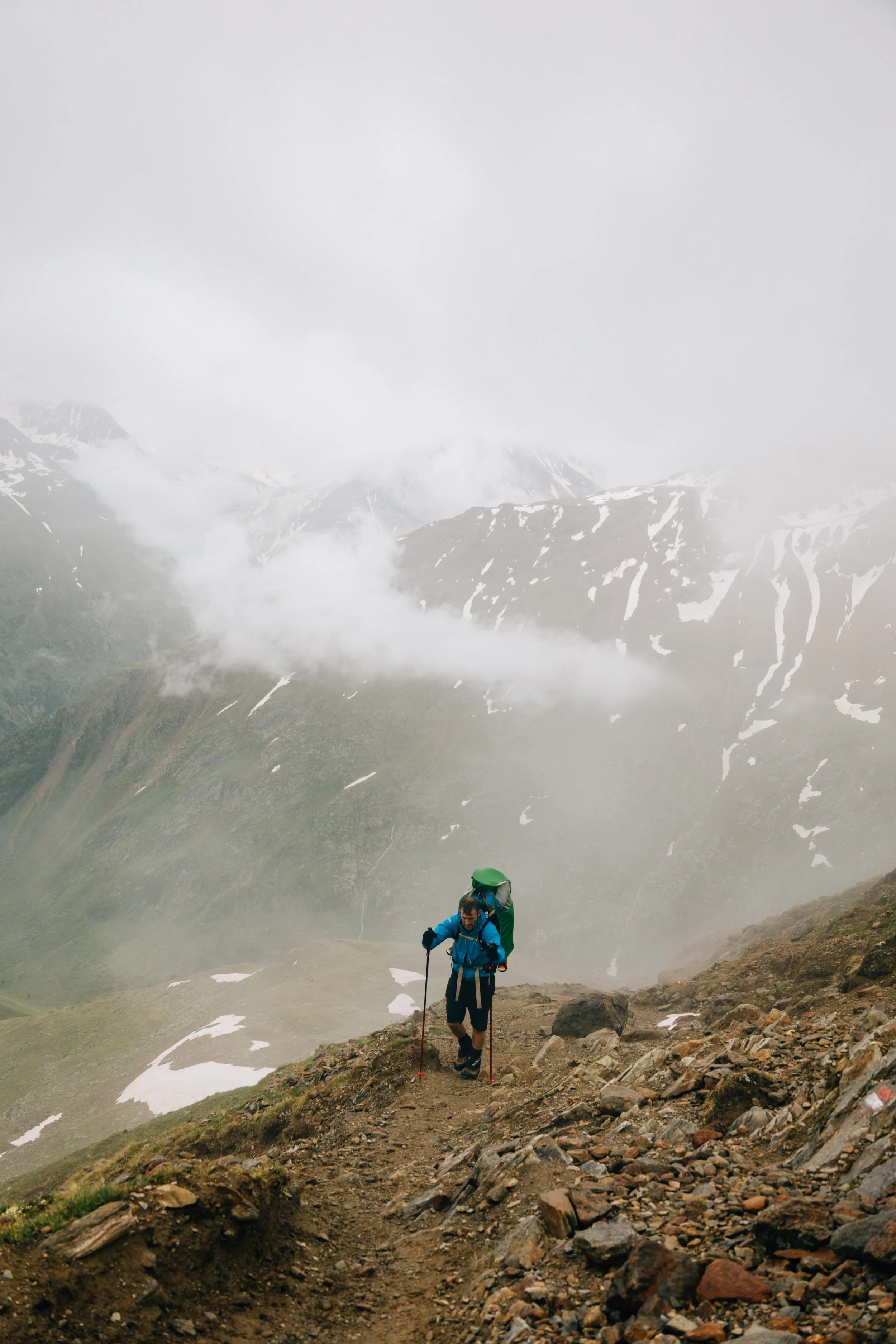
Hiking to the Breslauer Hütte, Austria
Huts we’ve stayed in with our kids
Rifugio delle Marmotte, Gran Paradiso National Park, Italy — we found this hut super family friendly but there are no private rooms, only dormitories with bunk beds, so this may be better suited to families with older children. We got lucky and had a room to ourselves as we were the only people there, and I ended up sharing a single bunk with our 2 year old which was not a problem for me. The owners were lovely, the food amazing and the walk in was steep but short. There was loads of hiking from the refuge so you could easily stay two nights and hike from the hut on your second day.
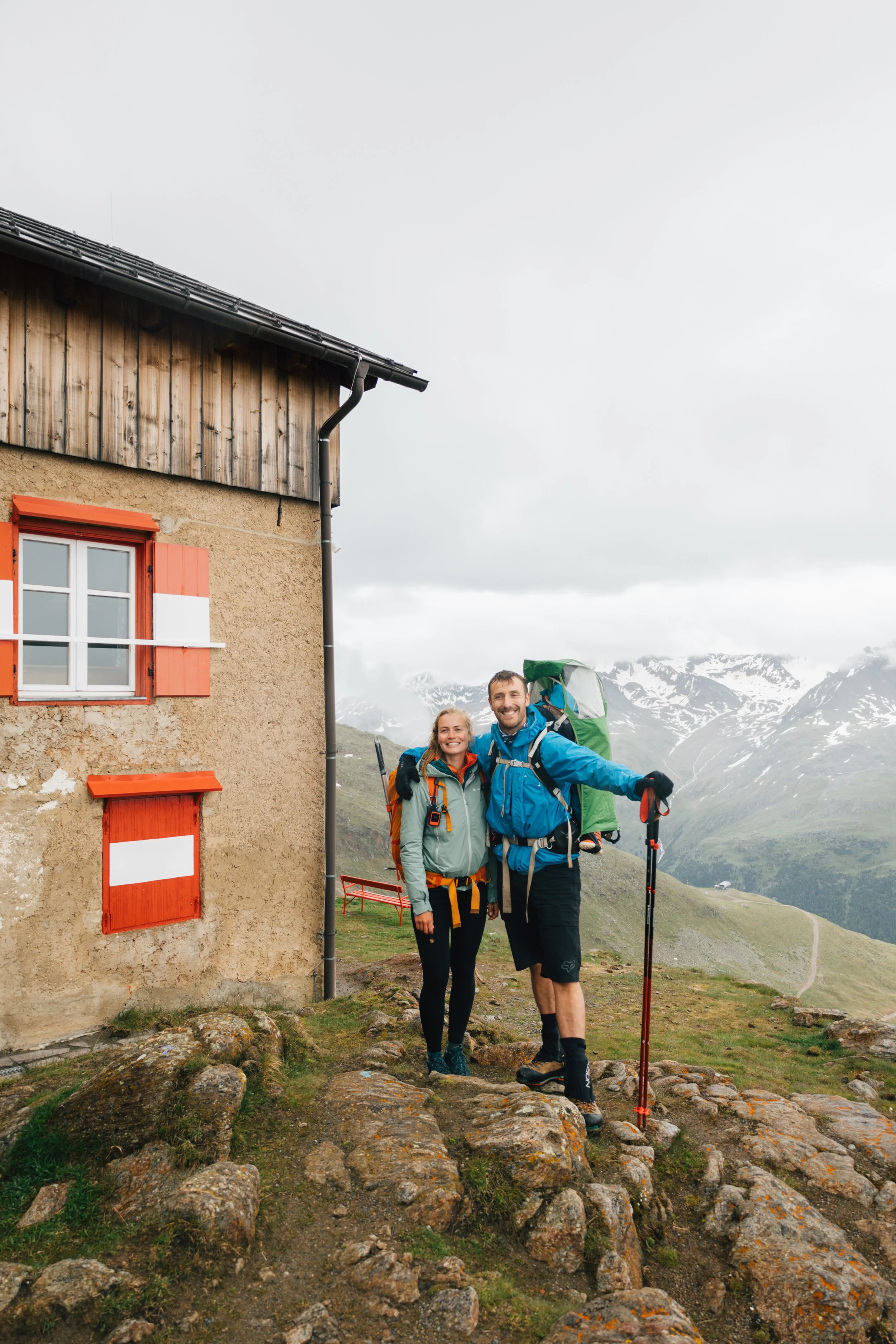
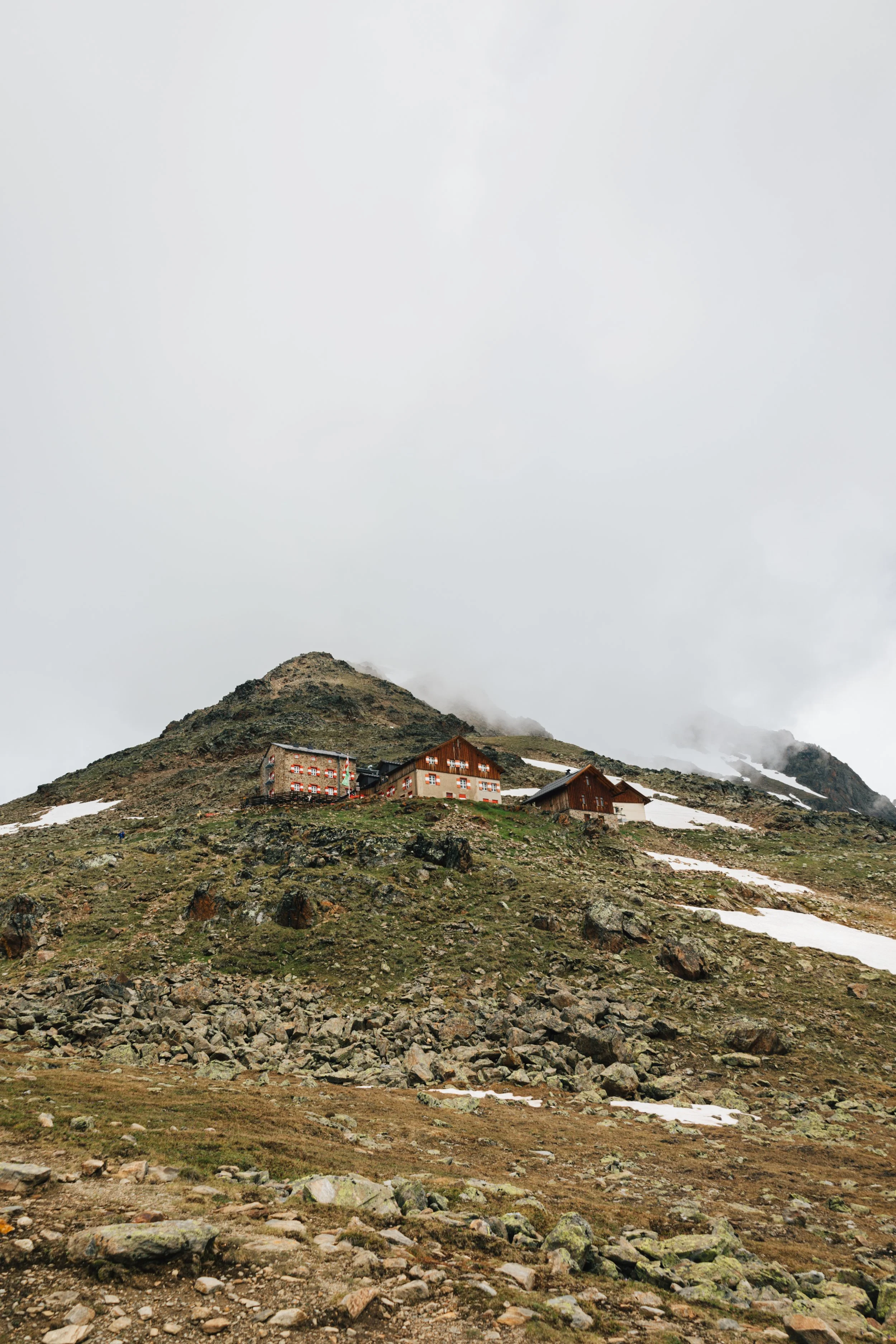
Breslauer Hütte, Ötztal Valley, Austria — We stayed here when our toddler was 2 and I was pregnant with our second baby. Taking the chairlift from Vent meant the walk-in was only 1 hour but it was steep and there was one snow patch to cross (July). The food was delicious and the people were lovely and accomodating of our kids (our friends also had a baby). We had two private rooms between 4 adults and 2 children, and both me and Molly co-slept with our kids in single bunk beds.
Rifugio Grand Tournalin, Aosta Valley, Italy — we stayed here with our 8 month old baby in 2022. It was a long hike to walk in but felt manageable for us at the time as we were used to hiking long distances with our baby in the backpack. You do have to hike over two passes so if you choose to stay here be aware you need good hiking fitness and to watch the weather. Apparently our baby was the youngest person ever to stay here at the time and the owners were so lovely. They made a delicious dinner and breakfast and we had a private room with single beds that we pushed together to make a double bed. This was a great refuge but perhaps not the most ‘family-friendly’ due to being so remote.
Is It Worth It?
Staying in a mountain refuge with little kids definitely requires planning and consideration. But for us, it’s pure magic.
Watching the sunset above the clouds.
Sharing a simple mountain dinner together.
Seeing your children fall asleep surrounded by mountain peaks.
These are the kinds of adventures that shape family memories for years to come.
And if you start with the right hut, the right route, and realistic expectations — it’s not only possible, but it will become an unforgettable experience.